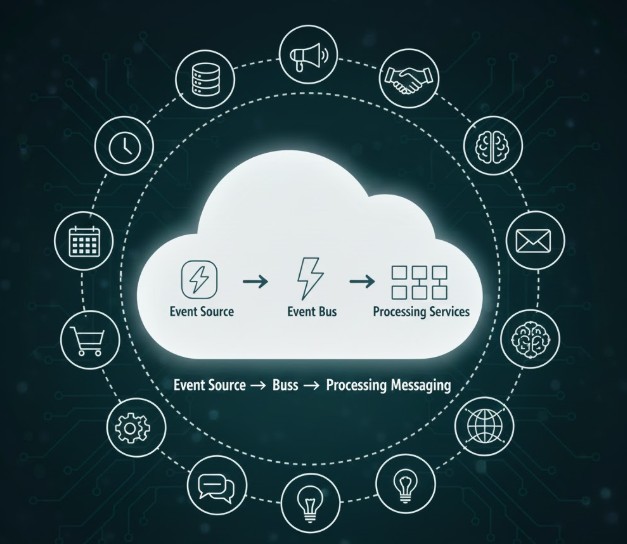
Digital platforms today rely heavily on real-time interactions, from financial transactions to chat apps and IoT networks. The Tech Behind Event-Driven Messaging Systems plays a crucial role in making these instant interactions possible. Event-driven systems allow applications to respond immediately to changes, triggers, or signals—powering fast, scalable, and resilient communication structures.
What Is Event-Driven Messaging?
Event-driven messaging is a communication pattern where components react to specific events instead of relying on constant polling or scheduled checks. In this model, producers emit events, and consumers respond when those events occur.
Core Benefits
-
Real-time responsiveness
-
Loose coupling between services
-
High scalability under dynamic workloads
-
Efficient resource usage
The Technologies Powering Event-Driven Messaging Systems
Event-driven platforms rely on a blend of modern technologies designed to handle high-speed, high-volume data flows.
1. Message Brokers
Message brokers act as intermediaries that route, filter, and deliver messages between components.
Common Examples:
-
Apache Kafka
-
RabbitMQ
-
NATS
These brokers enable durable, distributed, and scalable message delivery.
2. Event Streams
Event streaming platforms store and process continuous event data flows. They support real-time analytics and provide replay capabilities.
Use cases include:
-
Fraud detection
-
Live dashboards
-
Transaction monitoring
Internal guide reference: /stream-processing-overview/
3. Serverless Functions
Serverless platforms execute code only when an event triggers them, making them efficient for event-driven workflows.
Popular frameworks:
-
AWS Lambda
-
Google Cloud Functions
-
Azure Functions
These allow teams to build scalable, event-triggered operations with minimal infrastructure management.
4. Event Routers and Gateways
Routers control how events flow between services using rules, filters, or priorities.
Roles include:
-
Directing certain events to specific consumers
-
Filtering unnecessary data
-
Coordinating multi-step workflows
5. Observability and Monitoring Tools
Since event-driven systems run continuously, monitoring tools are essential. These tools track latency, throughput, event failures, and system health.
Examples include:
-
Prometheus
-
Grafana
-
Elastic Stack
How Event-Driven Messaging Systems Improve Scalability
Event-driven architecture enables horizontal scaling, meaning additional consumers can be added without altering the producer. This flexibility helps large organizations manage millions of events per second.
Key scalability techniques:
-
Consumer groups
-
Topic partitioning
-
Parallel processing
-
Event batching
Challenges of Event-Driven Systems
Despite their power, event-driven systems come with challenges:
-
Ensuring message ordering
-
Handling duplicate events
-
Designing idempotent consumers
-
Maintaining observability
-
Avoiding overly complex workflows
Conclusion
The Tech Behind Event-Driven Messaging Systems provides the foundational infrastructure for real-time digital experiences. With message brokers, serverless triggers, event streams, and intelligent routing, organizations can build systems that respond instantly, scale effortlessly, and adapt to rapid data flows. As industries continue moving toward real-time operations, event-driven messaging will remain a core technology powering the future of digital communication.


