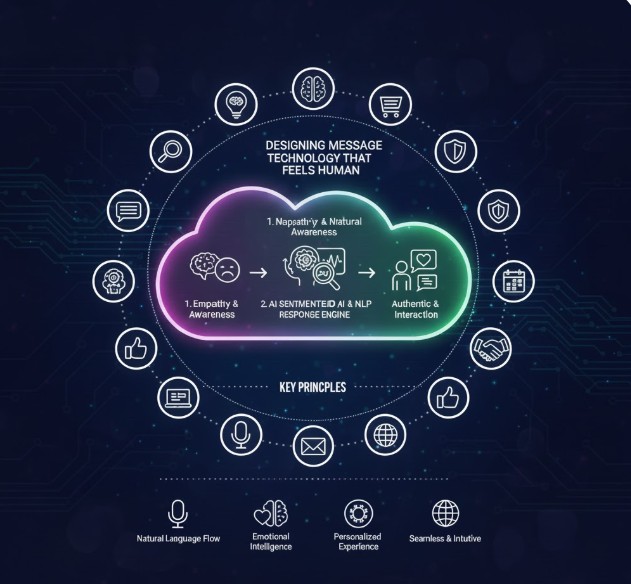
Designing Message Technology That Feels Human has become a core priority in modern communication systems. As digital platforms increasingly mediate conversations, users expect interactions that feel intuitive, natural, and emotionally attuned. Human-like messaging design doesn’t mean mimicking people perfectly—but rather crafting systems that respond with clarity, empathy, and contextual awareness. This article explores the essential principles behind making message technology feel more human, without relying on unnecessary complexity.

Why Human-Centered Messaging Matters
Digital communication tools can often feel mechanical, cold, or transactional. When the experience lacks emotional cues or conversational flow, users may feel misunderstood or disconnected.
Designing messaging that feels human helps:
-
Build trust through clarity and empathy
-
Reduce miscommunication caused by rigid phrasing
-
Improve user satisfaction
-
Support smoother customer service interactions
-
Strengthen brand personality
In short, a human-like message experience supports both emotional and functional goals.
Core Principles of Designing Human-Like Message Technology
1. Tone Adaptability
A one-size-fits-all approach to messaging is outdated. Human communication adjusts tone depending on context, urgency, and emotional state.
Technology should do the same by:
-
Softening tone when offering apologies
-
Being concise during high-stress scenarios
-
Adding warmth in positive interactions
-
Maintaining neutrality during instructional moments
Tone flexibility makes messages feel alive rather than automated.
2. Context Awareness
Human conversation naturally depends on context. Messaging systems should understand:
-
previous user interactions,
-
current tasks or goals,
-
emotional cues,
-
interaction history.
Contextual relevance prevents repetitive or irrelevant responses, creating a conversation that feels attentive and smart.
3. Natural Conversation Flow
Human communication includes pauses, confirmations, clarifications, and pacing.
Technology should mimic this by using:
-
short, digestible messages,
-
appropriate spacing and timing,
-
friendly transitions,
-
optional elaboration (“Would you like more details?”).
This helps avoid overwhelming or robotic sequences.
4. Empathy and Emotional Intelligence
Although technology can’t “feel,” it can recognize sentiment patterns and respond gently.
Examples include:
-
acknowledging frustration,
-
offering reassurance,
-
validating the user’s perspective.
Light, simple empathetic wording creates a supportive experience without pretending to be human.
5. Personalization Without Overstepping
Human-like design doesn’t require invasive data collection. Instead, it focuses on:
-
remembering preferences,
-
adapting writing style,
-
offering relevant next steps.
The goal is familiarity, not surveillance.
6. Clarity and Accessibility
Human communication values clarity. Message technology should avoid jargon, excessive length, or confusing phrasing.
Using accessible language ensures that everyone—regardless of experience level—feels understood.
Where Human-Like Messaging Is Heading Next
As technology evolves, future messaging experiences will include:
-
deeper emotional recognition,
-
more adaptive tone engines,
-
conversational memory that feels natural,
-
dynamic message timing that reacts to user engagement,
-
interfaces that adjust to mood and communication style.
The long-term direction of Designing Message Technology That Feels Human is toward systems that are supportive, intuitive, and capable of adapting to how people actually communicate.


